Identifier
The number or structured data that answers what is this? Examples include a GTIN, internal SKU, serial number, lot, asset ID or SSCC.
Plain-English guides to barcodes, GTINs, SKUs, 1D and 2D symbols, direct part marking, RFID, labels, scanners, traceability and the global move toward richer automatic identification.
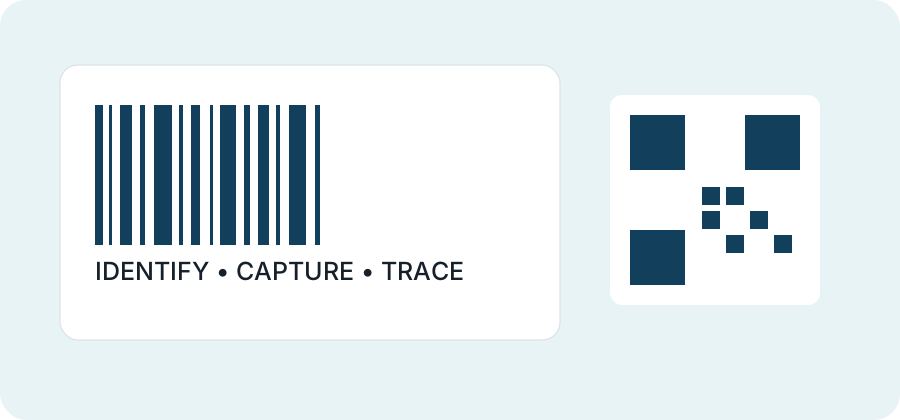
The number or structured data that answers what is this? Examples include a GTIN, internal SKU, serial number, lot, asset ID or SSCC.
The machine-readable representation that carries data: a UPC/EAN symbol, GS1-128, Data Matrix, QR Code, RFID tag or another technology.
The product, package, asset, location or event record that gives the identifier meaning inside your systems.
Plain-English explanations of identifiers, data carriers, check digits, and the difference between the number and the symbol that carries it.
Explore Barcode Fundamentals →UPC/EAN, Code 128, GS1-128, ITF-14, GS1 DataBar, and the practical limits of linear symbols.
Explore 1D & Linear Barcodes →QR Code, Data Matrix, GS1 DataMatrix, GS1 Digital Link, DotCode, PDF417, and richer data-capture use cases.
Explore 2D Barcodes →Engraved, etched, laser-marked, or dot-peened codes and why “3D barcode” is an informal description rather than a universal barcode class.
Explore Direct Part Marking →RAIN RFID, EPC, NFC, asset tags, OCR and adjacent identification technologies that complement rather than replace barcodes.
Explore RFID & Automatic Identification →Print quality, quiet zones, contrast, placement, scanners, label materials, verification, and troubleshooting.
Explore Labels, Printing & Scanning →SKUs, GTINs, serial numbers, lot and batch identifiers, package hierarchy, assets, locations, and traceability records.
Explore Product, Package & Asset Identity →Planning for richer 2D barcodes, coexistence with linear symbols, system readiness, data governance, testing, and rollout.
Explore 2D Transition & Implementation →Identify common GTIN lengths and verify the check digit.
Open validator →Work through print, placement, scanner and software failure points.
Troubleshoot →Compare line-of-sight, simultaneous reads and workflow needs.
Compare →Assess scanner, software, data, printing and partner readiness.
Assess readiness →GS1’s industry ambition is for retail point-of-sale systems to be capable of processing both established linear barcodes and newer 2D barcodes by the end of 2027. The transition is gradual; existing linear symbols are expected to coexist for some time as hardware, software and trading partners update.